

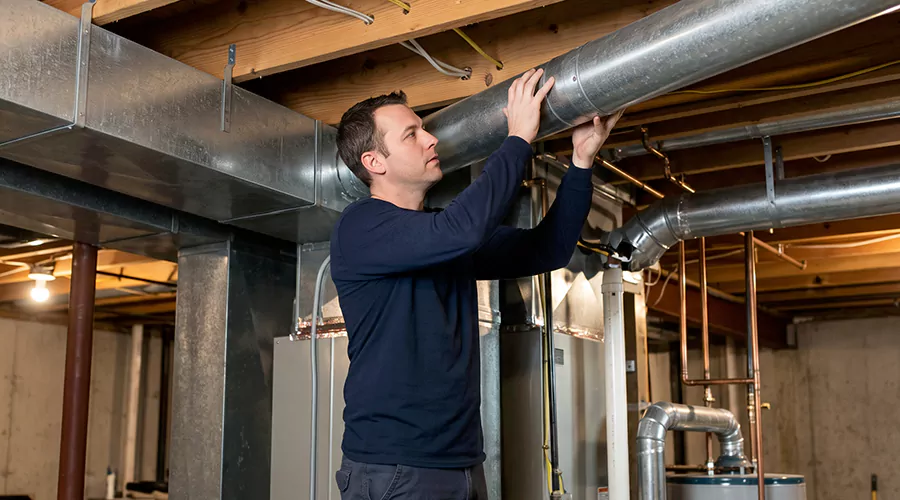
The main difference between supply and return air ducts is the direction in which they move air. Supply ducts deliver heated or cooled air from the HVAC system into rooms, while return ducts carry indoor air back to the furnace or air handler for conditioning and recirculation. Both are necessary for proper airflow, balanced indoor temperatures, and efficient heating and cooling. Professional ac vent repair can address damaged or restricted vents that interfere with airflow and affect indoor comfort.
A central HVAC system operates through a continuous cycle of air circulation. The blower moves indoor air through the equipment, where it is heated or cooled, and then distributes it throughout the house. Although supply and return ducts serve different purposes, they work together as one connected system. If either side becomes blocked, damaged, or improperly sized, airflow and comfort can suffer. Understanding how these ducts operate helps homeowners identify ventilation problems, maintain their systems, and communicate with HVAC technicians.
What Are Supply Air Ducts?
Supply air ducts carry conditioned air from the furnace or air handler to rooms throughout a building. During summer, they distribute cooled air from the air conditioning system. During winter, they deliver heated air from the furnace or heat pump.
Supply ducts connect to supply registers, typically installed in floors, walls, or ceilings. These registers allow conditioned air to enter the living space. The supply side of the duct network generally operates under positive pressure because the blower pushes air through it. A leaking supply duct can release conditioned air into an attic, crawlspace, or other unintended area instead of delivering it to the room.
What Are Return Air Ducts?
Return air ducts carry indoor air from occupied spaces back to the central HVAC equipment. Return grilles are commonly installed in hallways, living rooms, or other central locations. Some homes also have dedicated return ducts serving individual bedrooms. The return side generally operates under negative pressure relative to the surrounding space because the blower draws air toward the equipment.
The U.S. Department of Energy explains that return-air pathways help maintain balanced pressure and proper air circulation between rooms. A leaking return duct may draw unwanted air from an attic, crawlspace, or other building cavity into the system.
Supply vs. Return Air Ducts: Key Differences
| Feature | Supply Air Ducts | Return Air Ducts |
|---|---|---|
| Primary function | Deliver conditioned air | Bring indoor air back to equipment |
| Airflow direction | Away from air handler | Toward air handler |
| Typical pressure | Positive | Negative |
| Connected outlet | Supply register | Return grille |
| Temperature | Heated or cooled air | Room-temperature air |
| Common location | Individual rooms | Hallways and major rooms |
| Common problem | Lost conditioned air | Unwanted air drawn into system |
| Typical sizing | Based on room airflow requirements | Based on total return airflow requirements |
Both networks must be correctly sized and connected for the equipment to operate as intended.
How Do Supply and Return Ducts Work Together?
A typical HVAC circulation cycle includes several stages.
- Return grilles collect indoor air.
- Return ducts carry the air toward the HVAC equipment.
- Air passes through the system's filtration arrangement.
- The furnace, heat pump, or cooling coil conditions the air.
- The blower moves the conditioned air into supply ducts.
- Supply registers distribute it throughout the rooms.
- Room air returns through suitable circulation pathways.
- The cycle repeats while the blower operates.
Airflow does not always follow a direct path from one supply register to one return grille. Instead, it circulates through rooms and connected spaces.
How Can You Identify Supply and Return Vents?
A simple way to distinguish the two is to observe airflow while the HVAC blower operates. Supply registers blow air outward into the room. Return grilles draw room air inward. Supply outlets often have adjustable louvers that help direct airflow. Return grilles are usually larger and may have fixed openings. However, grille appearance is not a reliable method in every installation. Avoid placing objects against a return grille while testing. The opening needs to remain unobstructed for normal circulation.
Why Are Return Ducts Often Larger Than Supply Branches?
A return duct commonly carries air collected from several rooms, while an individual supply branch may serve only one outlet. Because of this, return trunks and central return grilles are often larger than individual supply branches. However, duct dimensions should be determined through airflow calculations rather than a fixed rule about which duct must be larger.
ACCA Manual D provides residential duct sizing methods that account for airflow, available pressure, duct length, and fitting resistance. An undersized return can restrict airflow throughout the HVAC system.
What Happens When Supply Ducts Are Blocked?
A restricted supply branch may prevent enough conditioned air from reaching a room. Common causes include crushed flexible ducts, closed dampers, disconnected fittings, and obstructed registers. The affected room may remain too warm during summer or too cold during winter.
A severe restriction can also contribute to elevated duct pressure or unwanted airflow noise. An HVAC technician can inspect the branch and measure airflow to determine whether cleaning, repair, or resizing is appropriate.
What Happens When Return Ducts Are Blocked?
A blocked return pathway can affect airflow through the entire HVAC system. Dirty filters, covered return grilles, and undersized return ducts are common causes of restriction. Some bedrooms also lack adequate return pathways when their doors are closed.
DOE Building America guidance explains that pressure differences between closed rooms and hallways can interfere with circulation. Professional ac duct cleaning can help remove accumulated dust and debris from air-conditioning ductwork when buildup is found to restrict airflow or affect system performance.
Proper solutions may include dedicated returns, transfer grilles, or suitable jump ducts.
Should Every Room Have Both Supply and Return Vents?
Not necessarily. Most occupied rooms need an appropriate supply of conditioned air, but every room does not require its own dedicated return grille. Many homes use central return grilles connected to the air handler. When rooms can be closed off, the system needs an adequate pathway for air to reach those central returns.
Bathrooms and kitchens are generally not used as ordinary return-air collection points because of odors and moisture-related concerns. The correct design depends on room requirements and applicable building standards.
Can Supply and Return Ducts Leak Air?
Yes. Both sides of the duct network can develop gaps, holes, or disconnected joints. Supply leakage wastes conditioned air before it reaches occupied rooms. Return leakage can draw air from unintended areas, potentially introducing dust, humidity, or odors.
ENERGY STAR estimates that typical residential duct systems lose approximately 20% to 30% of moving air through leaks and poor connections. Professional duct sealing can help correct significant leakage.
How Do You Maintain Supply and Return Ducts?
Routine maintenance helps preserve airflow and system performance. Keep supply registers and return grilles unobstructed. Replace HVAC filters according to the equipment manufacturer's instructions. Inspect safely accessible ducts for disconnected sections, damaged insulation, and crushed flexible branches.
Correct water leaks and other moisture problems promptly. The Environmental Protection Agency does not recommend cleaning residential ducts automatically on a fixed schedule. Cleaning should be based on documented conditions.
Conclusion
Supply ducts deliver heated or cooled air into rooms, while return ducts bring indoor air back to the HVAC equipment. Both sides must be properly sized, sealed, and unobstructed. Problems with either network can cause weak airflow, uneven temperatures, and increased energy use. Understanding the difference makes it easier to recognize duct problems and choose the appropriate inspection or repair service.